




More men than ever are turning to Botox—not because they want to look like someone else, but because they want to look like themselves again. The forehead that’s starting to look permanently furrowed. The lines between the brows that read as angry when you’re not. The crow’s feet that showed up somewhere in your forties and haven’t left. Botox handles all of it, fast, with no downtime and results that don’t announce themselves.
Dr. Douglas Steinbrech works exclusively with male patients at his plastic surgery practices in New York City, Los Angeles, and Chicago. Botox is among the most requested treatments at all three locations.
What is Botox?
Botox—short for botulinum toxin type A—is a neuromodulator injectable that’s been FDA-approved for cosmetic use since 2002. It works by blocking the nerve signal to specific facial muscles, preventing the contractions that cause lines and wrinkles to form. When a muscle can’t fully contract, the crease it’s been creating starts to smooth out. Simple as that.
This is different from filler, which adds volume. Botox doesn’t fill anything—it relaxes the muscle responsible for the problem. The skin above it follows.
It’s worth noting that the drug itself has been used in medicine for far longer than 2002. It treats chronic migraines, muscle spasticity, hyperhidrosis. The cosmetic application is one piece of a much longer clinical history, which is part of why the safety record on it is so well established.
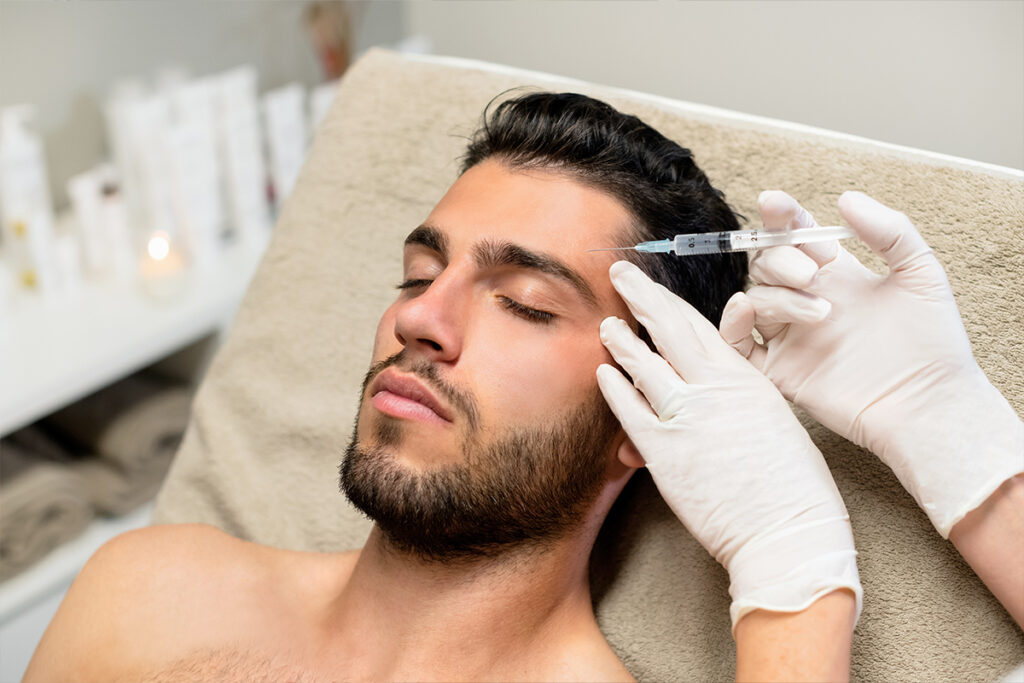
Botox for Men vs. Women: Why It’s Not the Same Treatment
A man’s facial muscles are built differently, which is why it’s sometimes referred to as “Brotox”. They’re thicker, denser, and in many cases stronger than female facial muscles—which means the dosing has to be adjusted accordingly. Use a female-calibrated dose on a male patient and you’ll either under-treat or produce a result that looks off.
Beyond dosing, the aesthetic goals are different. Most men aren’t coming in looking for an arched brow or a softer jawline. They want to look rested, not done. Sharp, not altered. That takes a different eye and a different hand.
Dr. Steinbrech has built his entire practice around male patients. His approach to Botox reflects years of working specifically with male anatomy and male aesthetic goals—not a female-first framework applied to men as an afterthought.
What to Expect at Your Appointment
The appointment is short. You’ll spend a few minutes going over what’s bothering you and what you’re hoping to address. Then the injections—fine needle, quick, most men describe it as a minor pinch. The whole thing wraps up in ten to fifteen minutes.
You walk out and go about your day. There’s no recovery, no visible sign that anything happened. Some slight redness at the injection sites is possible but typically fades within an hour.
Results begin showing up within 24 to 48 hours as the treated muscles start to relax. Full effect is visible around day seven. Most men are back in for a follow-up treatment somewhere between three and five months later.
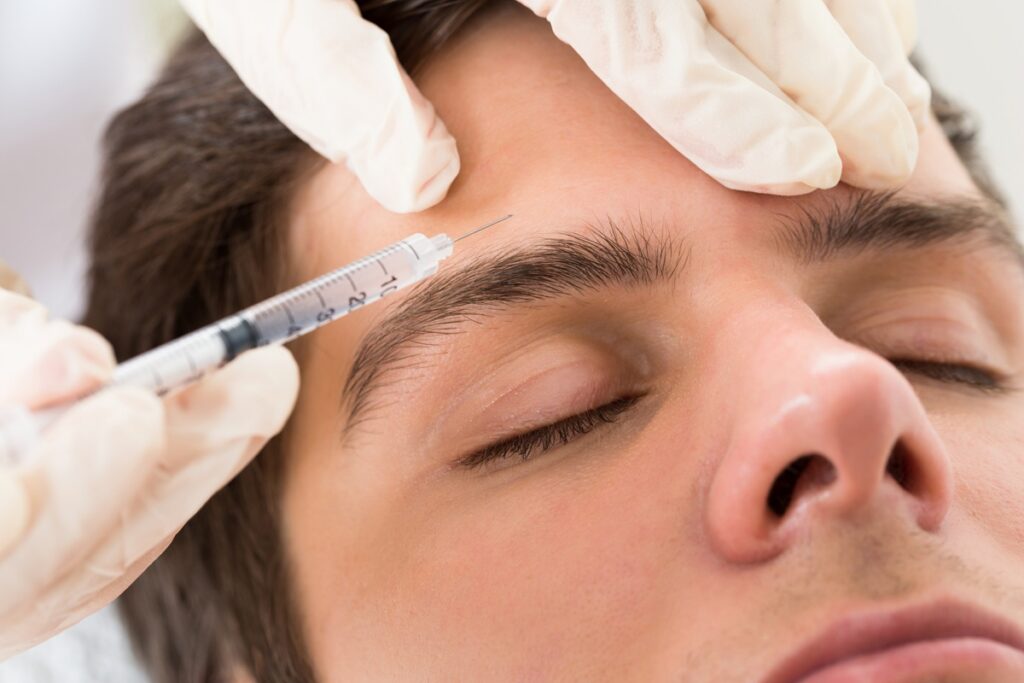
Areas Commonly Treated in Male Patients
Forehead lines: Horizontal creases across the forehead that deepen over time and eventually stay put even when the face is at rest.
Frown lines: The vertical lines between the brows. In men these can become deep and give the impression of frustration or stress that has nothing to do with how someone actually feels.
Crow’s feet: Lines at the outer corners of the eyes. Men tend to develop pronounced ones, especially with significant sun exposure or years of screen time.
Heavy or hooded brow: Precise placement along the brow line can create a subtle lift, making the eye area look more open and alert without any surgery.
Jaw tension: Botox injected into the masseter muscle reduces tension from clenching and grinding. As a secondary effect, it can also reduce the bulkiness of an overdeveloped jaw muscle.
Neck bands: The vertical cords along the neck—platysmal bands—can be softened with targeted injections for men who aren’t ready to consider a surgical neck procedure.
Not every patient needs every area addressed. Dr. Steinbrech assesses each patient individually and treats only what actually makes sense.
Botox® for Excessive Sweating (Hyperhidrosis)
Botox for sweating is FDA-approved to treat hyperhidrosis—a condition where sweat glands produce more sweat than necessary. Common treatment areas include underarms, palms, and soles of the feet.
Who is a Good Candidate for Botox?
Botox, or Brotox, works best for men who have dynamic wrinkles—lines that form from facial movement and expression. If you’re in good general health, bothered by one or more of the areas listed above, and open to periodic maintenance treatments, you’re likely a strong candidate.
A consultation with Dr. Steinbrech will confirm whether Botox is the right approach, and if so, which areas and what dosing make the most sense for your face specifically.
Why Men Are Getting Botox
Close to 400,000 men get Botox each year in the United States, and that number has climbed consistently for two decades. The reasons aren’t complicated.
The results are good. Providers who understand male anatomy produce outcomes that look natural—rested, sharp, not treated. When the results look right, word spreads.
The time commitment is minimal. Ten minutes, no downtime, no one in the office needs to know you went anywhere. For men with full schedules, that matters.
And the stigma is gone. Men between 35 and 65, across every profession and background, are making Botox part of how they take care of themselves. They just tend to keep it quiet.
Starting Botox Earlier Pays Off
Most men wait longer than they should. The logic is intuitive—wait until it’s bad, then fix it. But the clinical reality runs the other way.
Lines that have been setting for fifteen or twenty years are harder to treat. The skin has taken on a structural crease that takes time and consistent treatment to soften. Men who start earlier—in their thirties, sometimes late twenties—address the problem before it compounds. The muscles never develop the deep contraction habits that produce permanent lines in the first place.
Earlier treatment, maintained consistently, produces more natural results over the long term. That’s not a pitch. It’s just how the biology works.
Three Practices. One Focus.
Dr. Steinbrech sees patients in New York City, Los Angeles, and Chicago. Each location operates with the same clinical standards and the same exclusive focus on male patients.
Frequently Asked Questions About Botox for Men
Will anyone be able to tell I had something done? Not if it’s done correctly. The frozen look that men worry about comes from over-treatment or from providers who don’t understand male facial structure. Dr. Steinbrech takes a conservative approach calibrated specifically for men—enough to address the concern, not so much that your face stops moving. Most patients find that people notice they look better without being able to say why.
How long does the appointment take?
Ten to fifteen minutes for the injections. Plan for a bit more if it’s your first visit and you want to go through the consultation thoroughly.
When will I see results?
Changes start appearing within 24 to 48 hours. Full effect typically shows up by the end of the first week.
How long does Botox last?
Three to five months for most men. Metabolism and exercise habits play a role. Men who train hard sometimes find it wears off faster. Consistent long-term patients often find they can go a bit longer between treatments over time.
Is it painful?
The needle is very fine. Most men describe it as a brief pinch, nothing more. Numbing is available but rarely requested.
What’s the recovery like?
There isn’t one. Skip hard exercise for the first 24 hours. Everything else—work, driving, going out—is fine immediately after the appointment.
Is Botox safe?
Botulinum toxin type A has been FDA-approved for cosmetic use since 2002 and used clinically for decades before that. It has one of the most thoroughly documented safety profiles in aesthetic medicine. Administered by a qualified physician, it is considered safe for the overwhelming majority of patients.
 Douglas S. Steinbrech, M.D., F.A.C.S. is a plastic and reconstructive surgeon that specializes in male aesthetics. Dr. Steinbrech is certified by the American Society of Plastic and Reconstructive Surgeons and a diplomate of the American Board of Plastic Surgery.
