




Gynecomastia Surgery for Men
Gynecomastia can affect men of all ages, body types, and fitness levels. Characterized by enlarged male breast tissue, the condition often persists despite regular exercise, weight loss, and a healthy lifestyle. While many men initially assume they simply have excess chest fat, true gynecomastia is caused by glandular tissue that cannot be eliminated through diet or workouts alone.
If you have avoided fitted shirts, skipped the beach or pool, or felt self-conscious taking your shirt off at the gym, you are not alone. Gynecomastia is one of the most common conditions affecting the male chest, and it is also one of the most successfully treated through surgery.
At Male Plastic Surgery, Dr. Douglas Steinbrech specializes exclusively in cosmetic surgery for men. His approach to gynecomastia surgery for men is designed to restore a flatter, firmer, and more masculine chest while preserving natural body proportions. Every procedure is customized around male anatomy to deliver results that look athletic, balanced, and natural.
What Is Gynecomastia?
Gynecomastia is the enlargement of male breast tissue caused by the growth of glandular tissue beneath the nipple and chest. Unlike excess body fat, glandular tissue cannot be reduced through exercise or dieting.
Many men spend years trying to flatten their chest with weight training, cardio, or strict nutrition plans, only to discover that the fullness never completely disappears. That is because true gynecomastia is not simply a weight issue. It is a medical condition that often requires surgical treatment.
Depending on your anatomy, enlarged male breasts may result from:
- Hormonal changes
- Genetics
- Puberty
- Aging
- Certain medications
- Steroid use
- Underlying medical conditions
- Weight fluctuations
For many patients, surgery offers the most predictable and permanent solution for restoring a masculine chest contour.

What Causes Enlarged Male Breast Tissue?
Gynecomastia develops when the balance between testosterone and estrogen changes, causing glandular breast tissue to grow. Although commonly associated with adolescence, the condition can occur at virtually any stage of life.
Some of the most common causes include:
Hormonal Changes
Temporary hormone fluctuations during puberty frequently cause gynecomastia. While many teenage cases resolve naturally, some persist well into adulthood.
Aging
As men age, testosterone levels naturally decline. This hormonal shift can contribute to enlarged breast tissue, particularly when combined with weight gain.
Medications
Certain prescription medications, anabolic steroids, hormone therapies, antidepressants, and blood pressure medications have all been associated with gynecomastia.
Weight Changes
Obesity may increase both fat and glandular tissue in the chest. Even after significant weight loss, glandular tissue often remains, preventing the chest from appearing flat.
Medical Conditions
Liver disease, kidney disease, thyroid disorders, and other endocrine conditions can contribute to hormone imbalances that lead to gynecomastia.
A thorough consultation helps determine whether enlarged breast tissue is caused primarily by glandular tissue, excess fat, or a combination of both.
Gynecomastia vs. Chest Fat
One of the most common questions patients ask is whether they have gynecomastia or simply excess fat in the chest.
Although they may appear similar, the treatment options are very different.
True Gynecomastia
True gynecomastia involves enlarged glandular tissue beneath the nipple. The tissue often feels firm or rubbery and does not respond to exercise or weight loss.
Treatment typically involves surgical gland removal, often combined with liposuction.
Pseudogynecomastia
Pseudogynecomastia is caused primarily by excess fat accumulation.
Patients with pseudogynecomastia may benefit from Male Liposuction alone without requiring gland removal.
Combination Cases
Many men have both glandular tissue and excess fat. These cases often produce the best results by combining direct gland excision with liposuction to sculpt a flatter, more masculine chest.
Determining which type you have requires an in-person examination by an experienced surgeon.

Signs You May Be a Candidate for Gynecomastia Surgery
You may benefit from male breast reduction surgery if you experience:
- Enlarged or puffy nipples
- Firm tissue beneath the nipple
- Chest fullness that remains despite weight loss
- Uneven chest appearance
- Difficulty wearing fitted clothing
- Embarrassment at the beach or pool
- Self-consciousness during exercise
- Persistent chest enlargement lasting longer than one year
Many patients tell us that the emotional impact of gynecomastia is just as significant as the physical symptoms. Feeling uncomfortable removing your shirt or avoiding certain social situations can have a lasting effect on confidence.
Who Is a Good Candidate for Male Breast Reduction?
The best candidates for gynecomastia surgery are healthy men whose chest enlargement has remained stable and has not responded to lifestyle changes.
Ideal candidates generally:
- Are in good overall health
- Maintain a stable weight
- Do not smoke or are willing to stop before surgery
- Have realistic expectations
- Want permanent correction of enlarged male breast tissue
Surgery may not be recommended if an untreated hormonal or medical condition is causing the enlargement. During your consultation, Dr. Steinbrech will review your medical history, evaluate your anatomy, and determine the most appropriate treatment plan.
How Gynecomastia Surgery Works
Every gynecomastia procedure begins with a comprehensive consultation. During this visit, Dr. Steinbrech determines whether enlarged breast tissue is caused by glandular tissue, excess fat, or both.
The surgical approach is customized to each patient’s anatomy.
In many cases, surgery includes:
- Removal of glandular tissue
- Liposuction to improve chest contour
- Careful sculpting of the surrounding chest
- Small, strategically placed incisions designed to minimize visible scarring
Unlike procedures designed for women, male breast reduction surgery focuses on creating a flatter, stronger chest that complements masculine body proportions.
Some patients also choose to combine gynecomastia surgery with High Definition Liposculpting to further enhance chest and abdominal definition, creating a more athletic overall physique.
What to Expect During Recovery
Recovery after gynecomastia surgery is different for every patient, but most men are surprised by how quickly they can return to their normal routine. Following your post-operative instructions carefully is one of the most important factors in achieving the best possible outcome.
The First Week
Immediately after surgery, it is normal to experience swelling, bruising, and mild soreness in the chest. A compression garment will be worn to minimize swelling, support healing, and help the chest conform to its new shape.
Most patients are able to:
- Walk the same day as surgery
- Return to desk work within several days
- Manage discomfort with prescribed or over-the-counter medication
- Resume light daily activities within the first week
Weeks Two Through Four
As swelling begins to improve, patients typically notice significant changes in their chest contour. Most bruising has resolved, and everyday activities become increasingly comfortable.
During this stage, patients should continue wearing their compression garment as instructed and avoid strenuous upper-body exercise.
Four to Six Weeks
Many patients receive clearance to gradually return to:
- Weight training
- Chest workouts
- Running
- Sports
- Full physical activity
Every recovery is unique, so Dr. Steinbrech will provide recommendations based on your individual healing progress.
Three to Six Months
Although your chest will begin looking noticeably flatter within the first several weeks, the final results continue to improve as residual swelling subsides.
By this stage, patients typically enjoy a smoother chest contour, improved muscle definition, and increased confidence in and out of clothing.

Gynecomastia Surgery Results
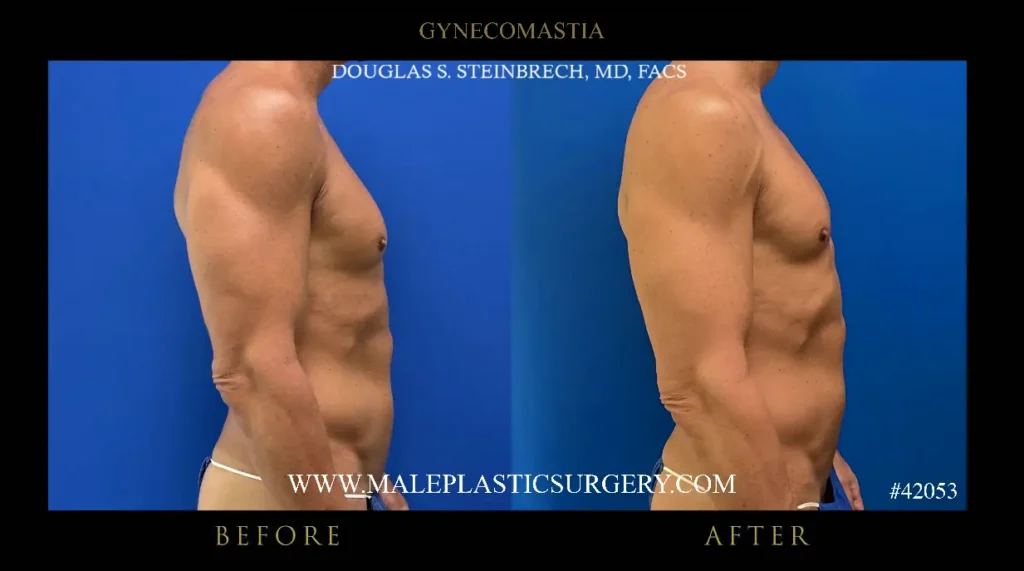
One of the biggest advantages of gynecomastia surgery is that the results are long lasting. Once glandular breast tissue has been removed, it does not grow back.
Maintaining a stable weight and healthy lifestyle can help preserve your results for many years.
Patients often report improvements that extend beyond their physical appearance, including:
- Increased confidence at the gym
- Greater comfort wearing fitted clothing
- Feeling comfortable at the beach or pool
- Improved body image
- More confidence in professional and social settings
Many men choose to build upon their results by pursuing additional body contouring procedures. For patients looking to further enhance abdominal definition, Silicone 6-Pack® Abs can complement a flatter chest by creating a more athletic upper body.
To better understand the results that may be possible, we encourage patients to explore our Gynecomastia Before & After Gallery and discuss their goals during consultation.
How Much Does Gynecomastia Surgery Cost?
The cost of gynecomastia surgery varies depending on the complexity of the procedure and each patient’s individual anatomy. Because every treatment plan is customized, there is no universal price that accurately reflects every case.
Several factors influence the total cost, including:
- The amount of glandular tissue being removed
- Whether liposuction is also required
- The severity of the condition
- Skin tightening or skin removal needs
- Surgical facility fees
- Anesthesia
- Geographic location
Rather than focusing solely on cost, patients should consider the experience of their surgeon and the quality of the expected results. Male chest contouring requires a specialized understanding of masculine anatomy, and choosing a surgeon with extensive experience performing gynecomastia surgery for men can have a significant impact on the final outcome.
Following your consultation, you will receive a personalized treatment plan and an accurate estimate based on your goals.
Why Choose Dr. Douglas Steinbrech?
Male Plastic Surgery is built around one simple philosophy: cosmetic surgery for men requires a different approach.
Dr. Douglas Steinbrech performs procedures exclusively for male patients and has developed surgical techniques specifically designed to preserve masculine proportions while delivering natural-looking results.
Patients choose Dr. Steinbrech because of his:
- Exclusive focus on male plastic surgery
- Extensive experience treating gynecomastia
- Specialized micro-incision techniques
- Personalized surgical planning
- Commitment to natural-looking results
- National reputation in male aesthetics
Dr. Steinbrech is also the author of Male Aesthetic Plastic Surgery, a comprehensive textbook dedicated to the anatomical and surgical differences between male and female cosmetic procedures.
Many patients who undergo gynecomastia surgery later return to address other aesthetic goals, including facial rejuvenation with Botox for Men or enhanced facial structure through Alpha Jaw®. Every treatment plan is customized to the individual, allowing patients to enhance their appearance while maintaining natural masculine features.
Schedule Your Gynecomastia Consultation
If enlarged male breast tissue has affected your confidence, wardrobe, or quality of life, you do not have to continue living with it.
Gynecomastia surgery offers a permanent solution for many men seeking a flatter, firmer, and more masculine chest. During your consultation, Dr. Steinbrech will evaluate your anatomy, discuss your goals, and recommend a treatment plan tailored specifically to you.
Take the first step toward restoring your confidence by scheduling your consultation with Male Plastic Surgery today.
Frequently Asked Questions
What is gynecomastia?
Gynecomastia is the enlargement of male breast tissue caused by the growth of glandular tissue beneath the nipple. Unlike excess fat, glandular tissue typically cannot be eliminated through diet or exercise alone.
Can gynecomastia go away without surgery?
Some cases that develop during puberty resolve naturally over time. However, long-standing glandular tissue in adults usually requires surgery for permanent correction.
What is the difference between gynecomastia and chest fat?
Gynecomastia is caused by glandular tissue, while chest fat is caused by excess fat deposits. Many patients have a combination of both, which is why surgery often combines gland removal with liposuction.
Is gynecomastia surgery permanent?
Yes. Once the glandular tissue is removed, it typically does not return. Maintaining a stable weight helps preserve your long-term results.
Will I have visible scars from gynecomastia surgery?
Incisions are carefully placed in discreet locations, often around the edge of the areola, where scars tend to become less noticeable as they heal.
How painful is gynecomastia surgery?
Most patients describe recovery as soreness or tightness rather than severe pain. Discomfort generally improves significantly during the first week.
Is gynecomastia surgery covered by insurance?
In most cases, gynecomastia surgery is considered a cosmetic procedure and is not covered by insurance. Coverage varies depending on the underlying cause and your insurance provider.
Can I combine gynecomastia surgery with other procedures?
Yes. Many patients combine gynecomastia surgery with procedures like Male Liposuction or High Definition Liposculpting to achieve more comprehensive body contouring results.
How do I know if I am a candidate for gynecomastia surgery?
The best way to determine your candidacy is through a consultation. Dr. Steinbrech will evaluate your chest, discuss your concerns, and develop a personalized treatment plan based on your anatomy and goals.
 Douglas S. Steinbrech, M.D., F.A.C.S. is a plastic and reconstructive surgeon that specializes in male aesthetics. Dr. Steinbrech is certified by the American Society of Plastic and Reconstructive Surgeons and a diplomate of the American Board of Plastic Surgery.
